THE history OF GRÖNEFELD
As good wine is defined by its terroir and the production of a fine wine rests on the skill of the winemaker, so the finest watches are often the product of a particular location or area and of the expertise passed from generation to generation.
1896
Birth of Johan Heinrich Gerhard Louis Grönefeld
Johan - born on 14 July 1896 in Oldenzaal - was the grandfather of Bart and Tim. It was with Johan that the watchmaking history of the Grönefeld family began.

1912
Johan starts as a watchmaker
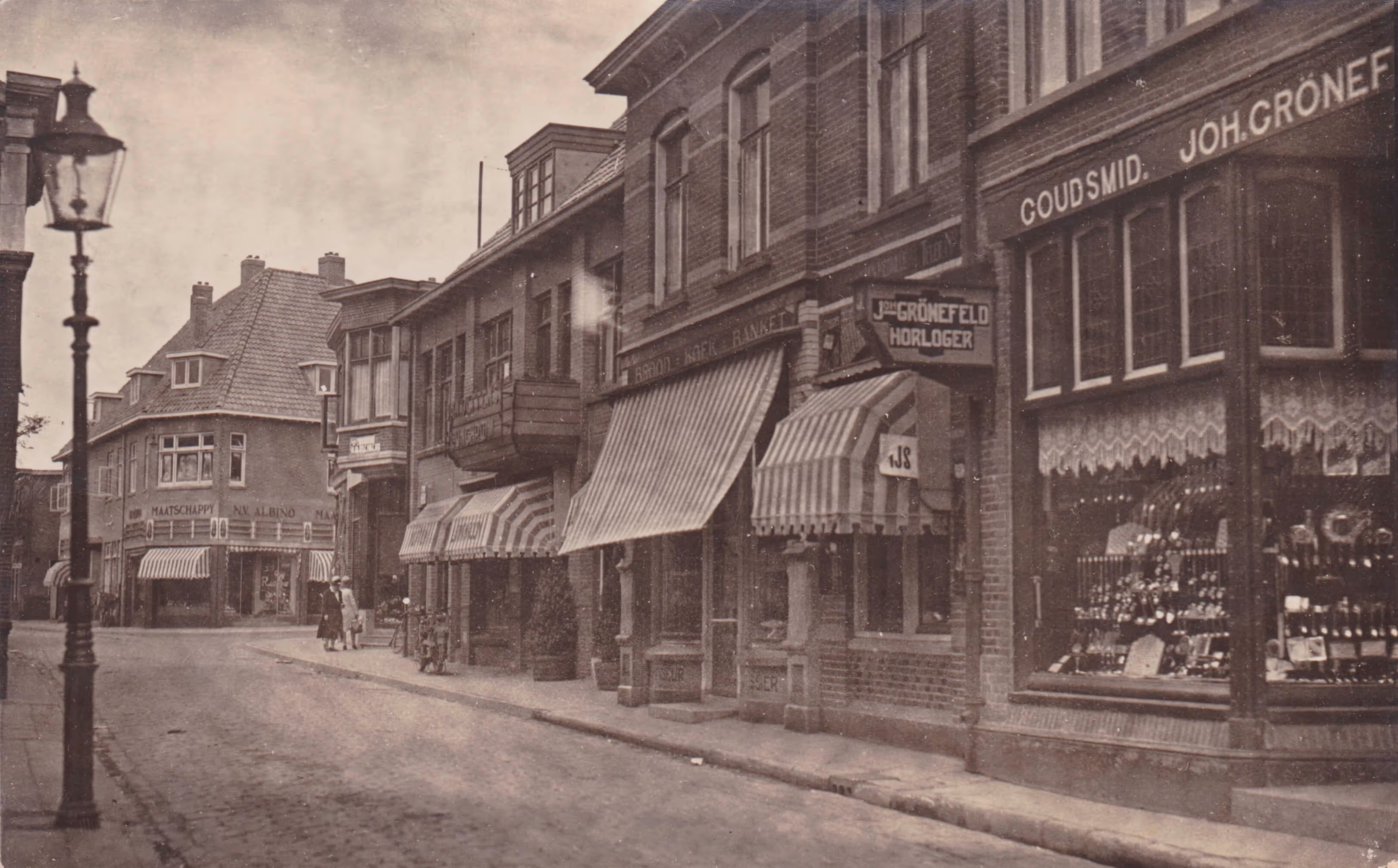
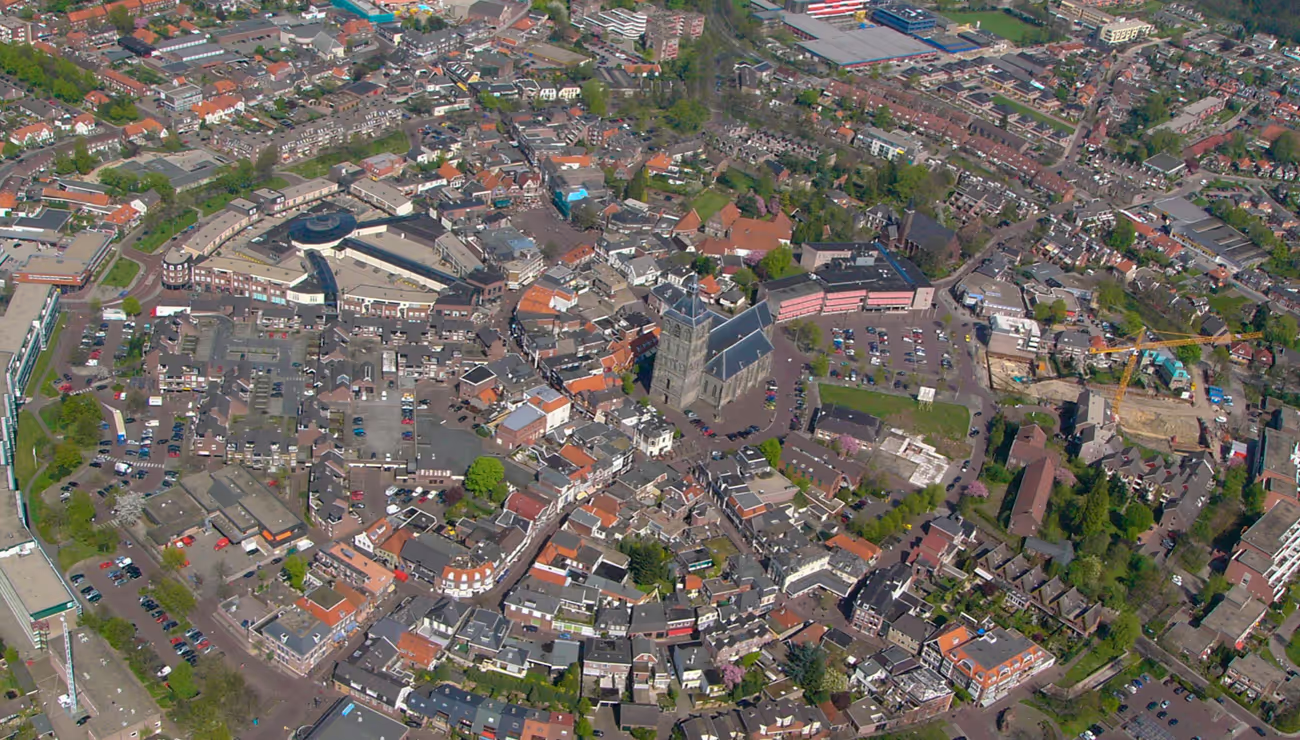
Taught by his uncle, Johan established his workshop and boutique in the shadows of Saint Plechelmus, a basilica and tower dating from 1240. He also looked after the church’s clock mechanism. Johan was both an exceptional watchmaker and consummate businessman. His prowess with watchmaking tools, combined with creativity and inventiveness, led to his reputation growing in Oldenzaal and beyond.
This is the beginning of the Grönefeld watchmaking family in Oldenzaal, the Netherlands and marks the start of the family tradition in the watchmaking profession.
1941
Birth of Bart and Tim’s father Joseph Albertus Johannes Grönefeld
Johannes Grönefeld, known locally as ‘Sjef’, was born on 5 November 1941, again in Oldenzaal. Inspired by his father, there was an inevitability in Sjef’s career choice when he entered the sphere of jewellery and watchmaking.
1962
Sjef joins his father Johan’s business
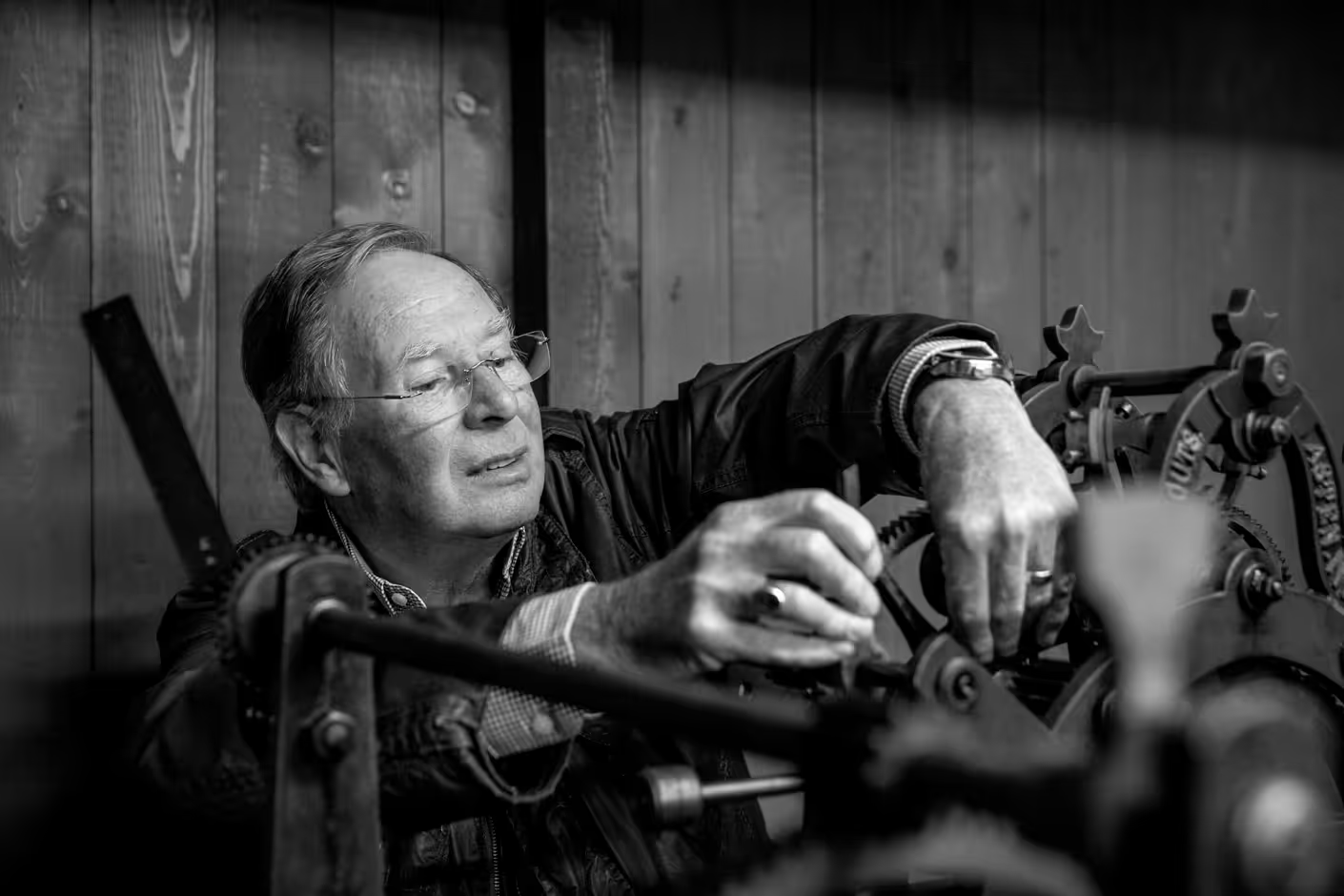
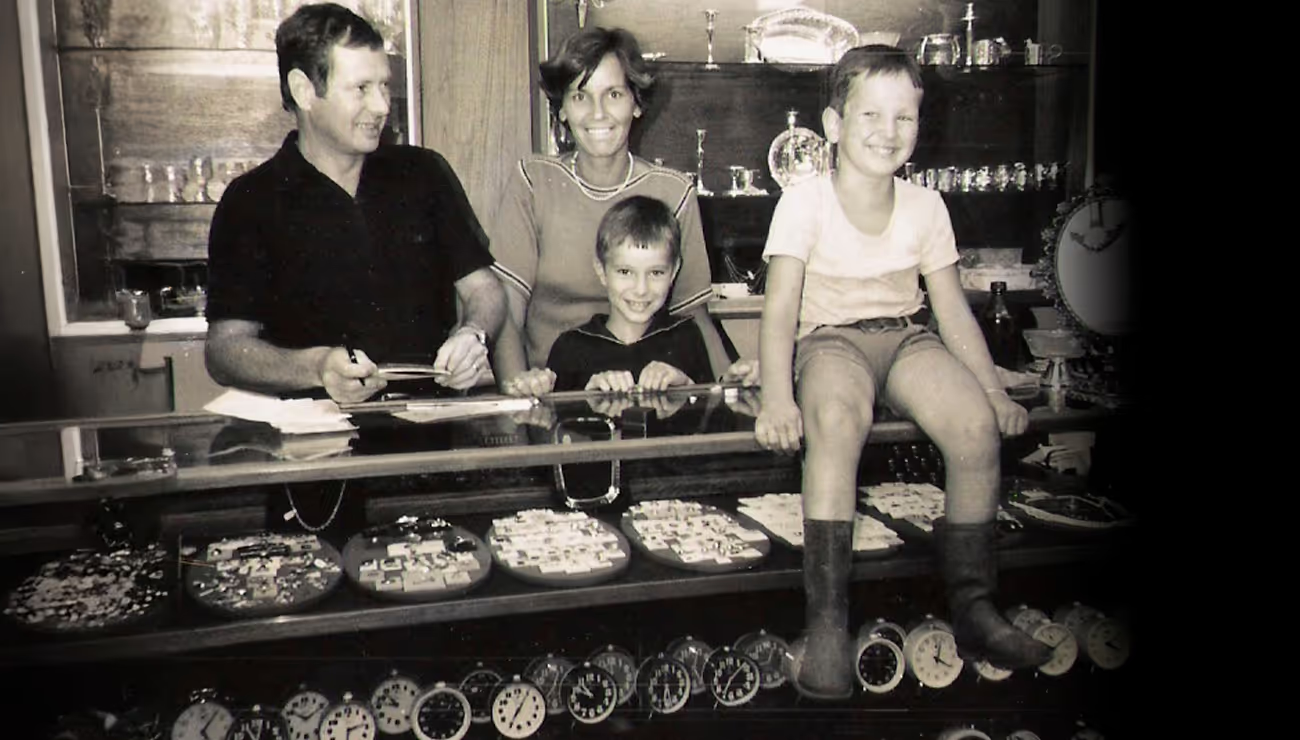
After his military service, Sjef joins his father’s business. In 1974, after Johan passed away, the mantle of attending to the clock within the local basilica passed to Sjef. The Grönefeld family continue to own and operate the workshop and boutique on Steenstraat established by Johan. It was within the confines of their grandfather’s workshop that Bart and Tim would play as children to the metronomic sounds of ticking clocks and watches. Hearing the seductive sounds of pallet levers at play proved too much for the ‘Horological brothers’ and they vowed to continue the work of their forebears.
1969
Birth of Bart Grönefeld
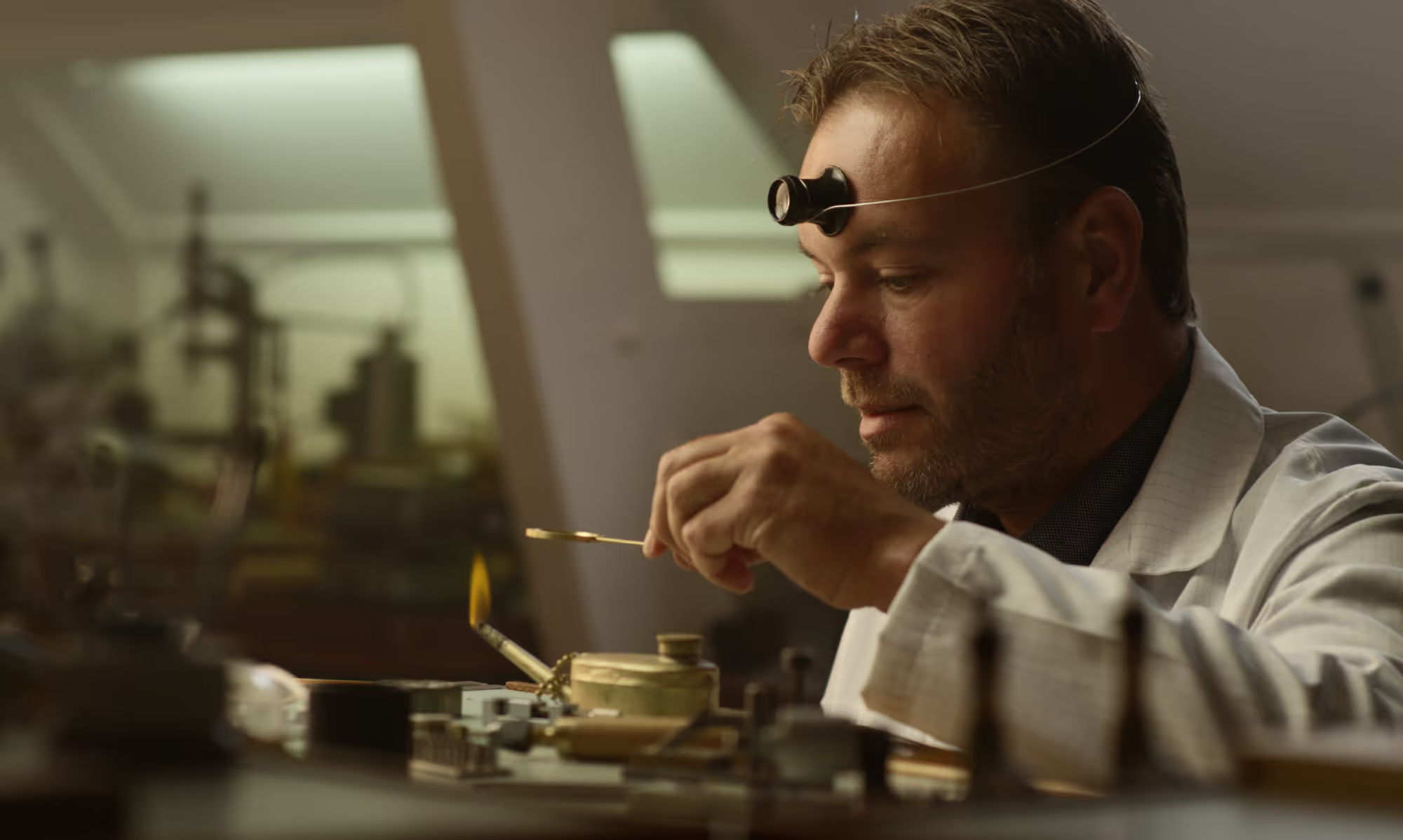
Bartholomeus Albertus Johannes Grönefeld, ‘Bart’, was born in 1969. After concluding his studies at technical school in Oldenzaal, Bart travelled to Rotterdam and attended a school for watch technicians ...
... Later, he travelled to Switzerland and trained at the world-renowned watchmaking school Wostep, Neuchâtel. After leaving Wostep, the bright lights of London beckoned and Bart worked for Asprey, the prestigious jewellers. One year later, he returned to Wostep, keen to advance his understanding of complicated watches.Each day he would work with a talented group of artisans on minute repeaters, chronographs and grande-sonneries. Later, his younger brother, Tim, joined him in Switzerland at Renaud et Papi.
Bart's education
1981-1985: Bart goes to the technical engineering school in Oldenzaal.
1985-1986: Bart starts the training to become a watchmaker at Vakschool Schoonhoven.
1986-1988: Bart continues to be trained as a watchmaker at Zadkine Rotterdam.
1988-1989: Bart internship at Seiko Rotterdam and received the Dutch watchmaking diploma.
1990: Bart follows the refresher course on watchmaking at Wostep in Neuchâtel, Switzerland.
1990-1991: Bart leaves to work for the iconic British luxury store Asprey in London.
1991: Bart returns to Wostep in Neuchâtel, Switzerland for the course on complicated watches.
Bart’s first years as a watchmaker
1992-1998: Bart works at Renaud et Papi (Now Audemars Piguet, Manufacture Le Locle), Switzerland. He becomes quickly responsible for all kind of complicated movements such as perpetual calendars, double split chronographs, minute repeaters etc. Bart is nicknamed: Ding-Dong.
1972
Birth of Tim Grönefeld
Tim Lambertus Joseph Grönefeld, simply ‘Tim’ to his friends, was born on the 12th March 1972. His career path took a similar route to his older brother’s. After leaving the same technical school as Bart in Oldenzaal, ...
... he attended Vakschool in Schoonhoven, a further education establishment for training watch technicians. Tim, chose to follow his older brother and also travelled to Switzerland.
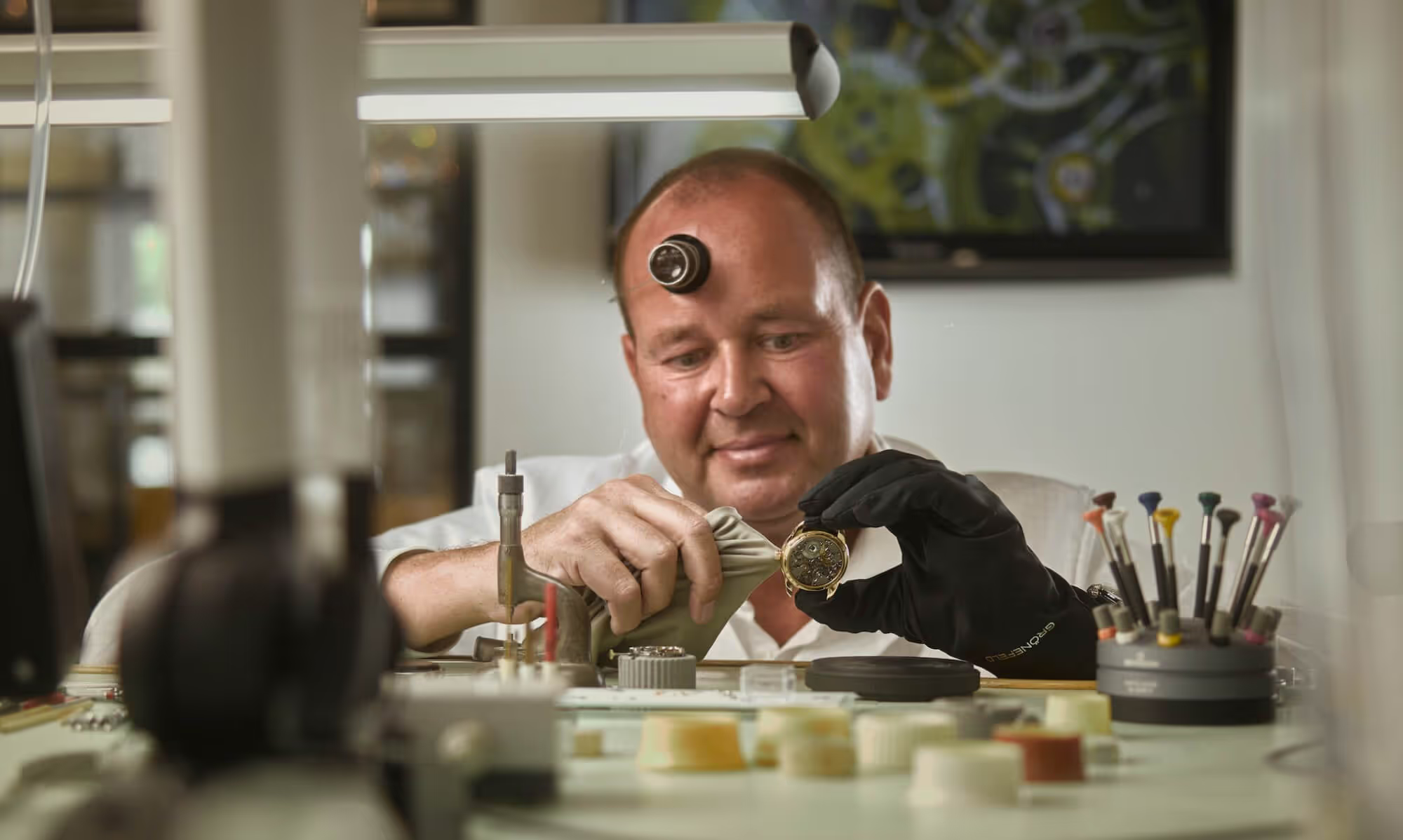
It did not take long for Tim to show his watchmaking prowess. He soon assumed responsibility for the training of other watchmakers. Moreover, he was also placed in charge of the assembly of tourbillons and regulator escapements, playing a key role in the quality control of complicated movements.
Tim’s education
1984-1987: Tim goes to the technical engineering school in Oldenzaal.
1988-1992: Tim is trained to become a watchmaker at Vakschool Schoonhoven.
1992-1993: Tim internship at Seiko Rotterdam and received the Dutch watchmaking diploma.
1993-1994: Tim does a one year course of hand engraving at Vakschool Schoonhoven.
1994: Tim follows the refresher course on watchmaking at Wostep in Neuchâtel, Switzerland.Tim’s first years as a watchmaker
1994-1998: Tim works at Renaud et Papi (Now Audemars Piguet, Manufacture Le Locle), Switzerland. He becomes quickly responsible for all Tourbillons, the accuracy of all movements. The escapements, hairsprings and the accuracy are Tim's specialty. Tim is nicknamed: Tick-Tock.
1998
return to Oldenzaal
Bart and Tim return to their roots in Oldenzaal. They build their watchmaking atelier parallel to Sjef and Netty's jewelry business.
2003
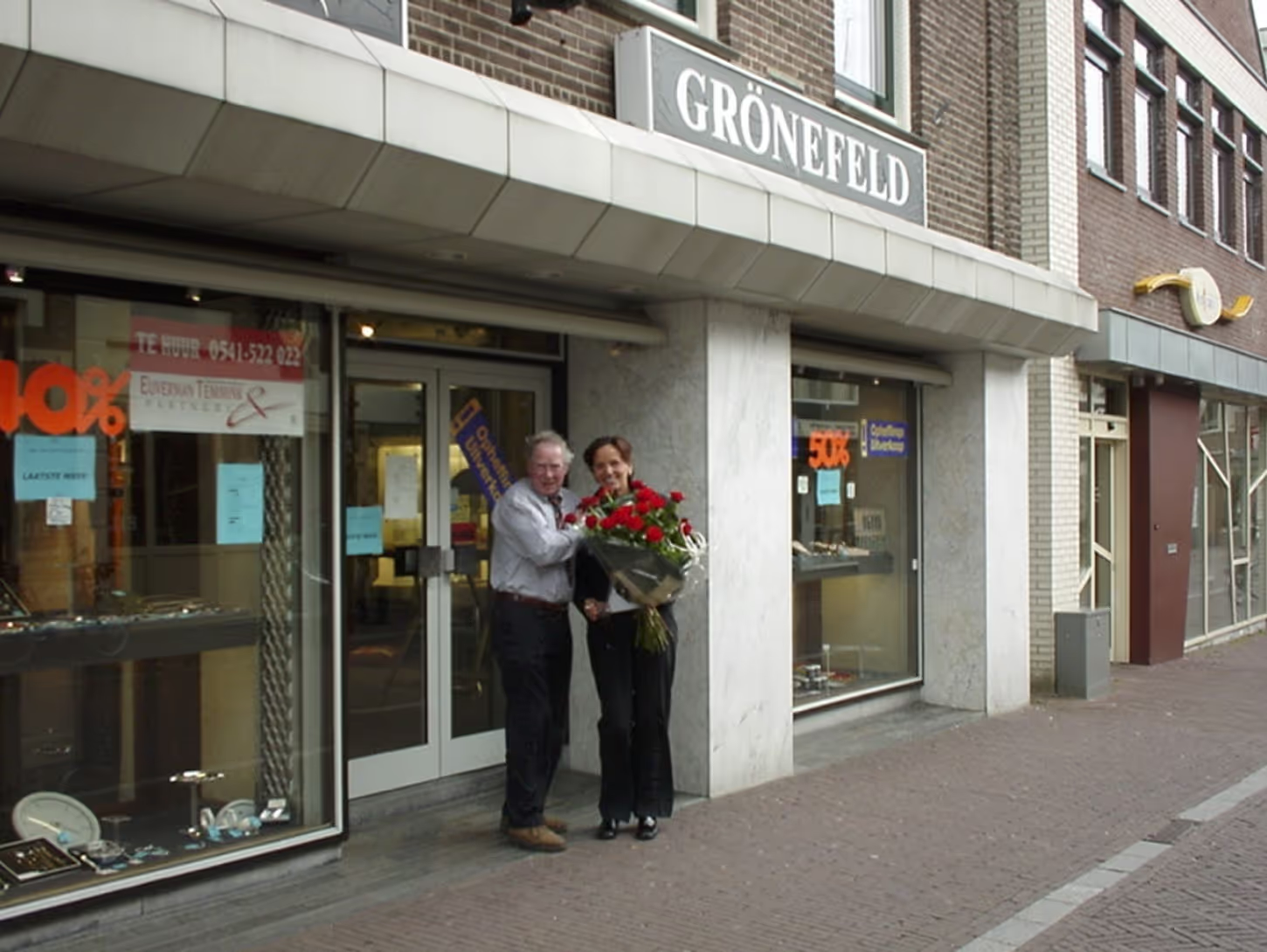
Sjef and Netty retire
Sjef and Netty close their jewelry store in Oldenzaal and retire.
2008
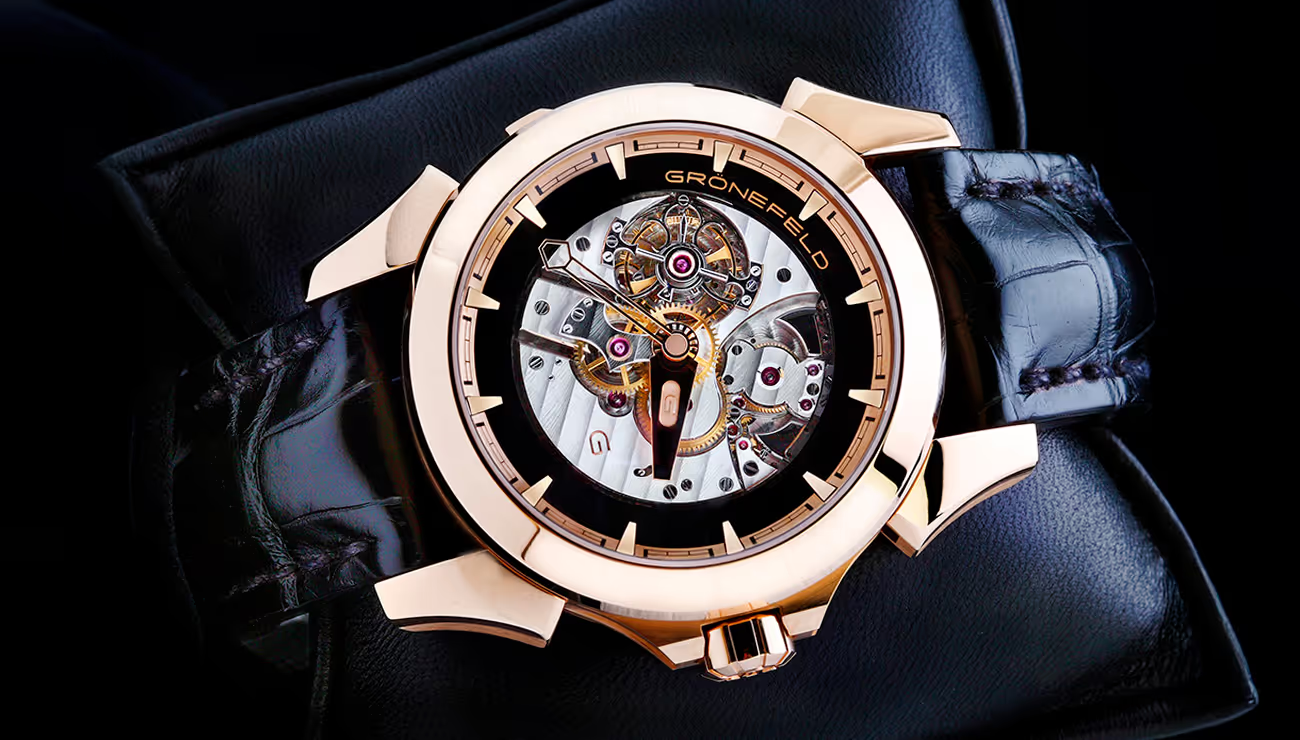
Launch of the GTM-06 Tourbillon Minute Repeater
The GTM-06 Tourbillon Minute Repeater is the first watch to bear the Grönefeld name. On the opening night of the Millionaires Fair in December that year, the GTM-06 goes off in 20 minutes for € 325.000.
On Friday 21 November 2008, Bart & Tim appear on the National TV show Pauw & Witteman.
2010
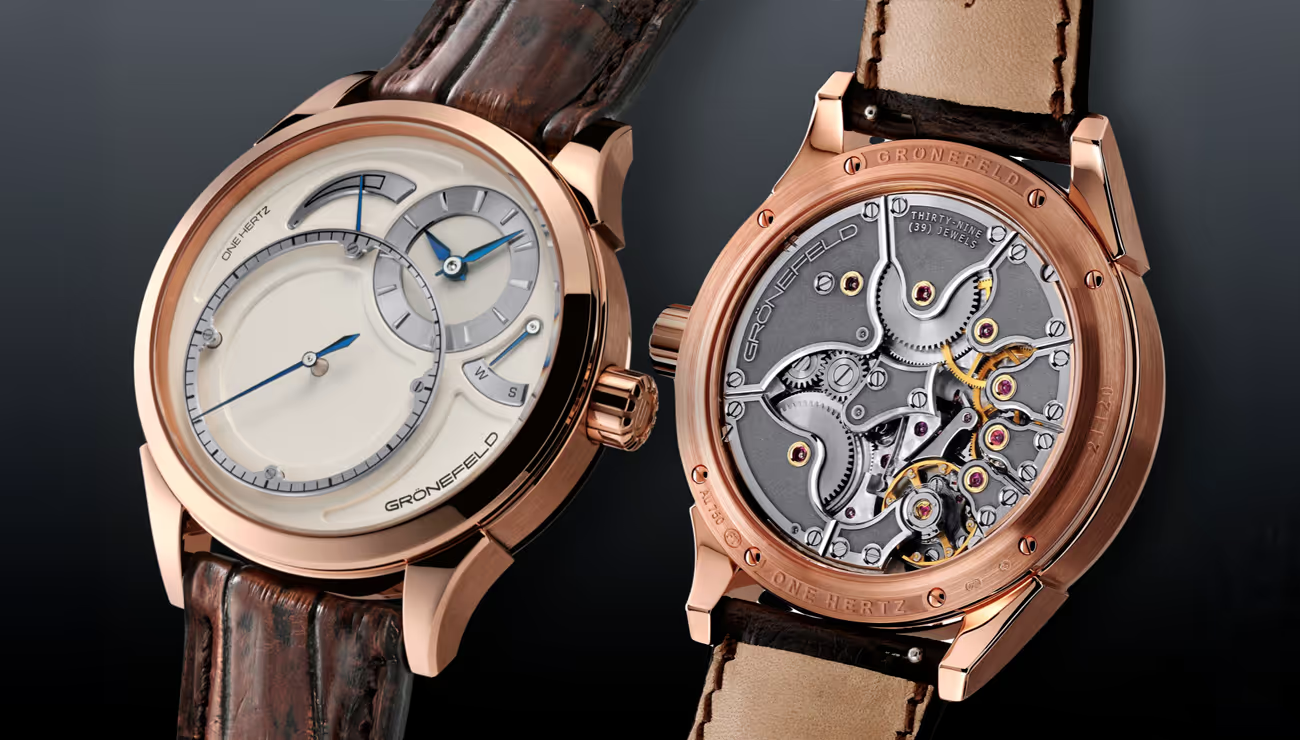
Introduction of the One Hertz
The One Hertz is the world's first wristwatch with an independent jumping seconds mechanism. The One Hertz was awarded Watch Of The Year by timezone.com, a leading website for wristwatch collectors and enthusiasts.
2014
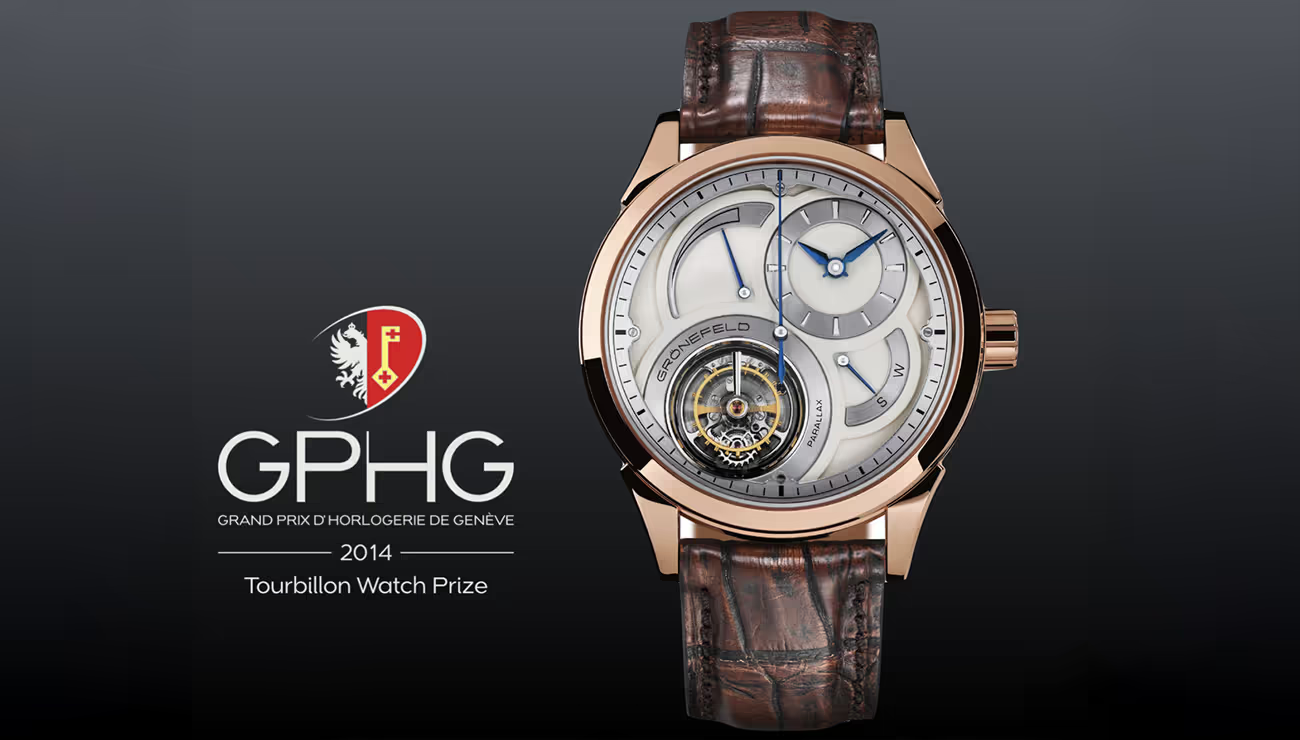
Introduction of the Parallax Tourbillon
The Parallax Tourbillon is a technically advanced timepiece that wins multiple awards, including the Grand Prix d'Horlogerie de Genève in the Tourbillon category.
2016
Introduction of the 1941 Remontoire
The 1941 Remontoire is the first Grönefeld watch with the famous 1941 case. The Grönefeld 1941 Remontoire features an eight seconds constant force mechanism, ensuring the force serving the balance wheel does not wane. The Remontoire wins this year's prestigious GPHG award in the Men's Watch category.

2018
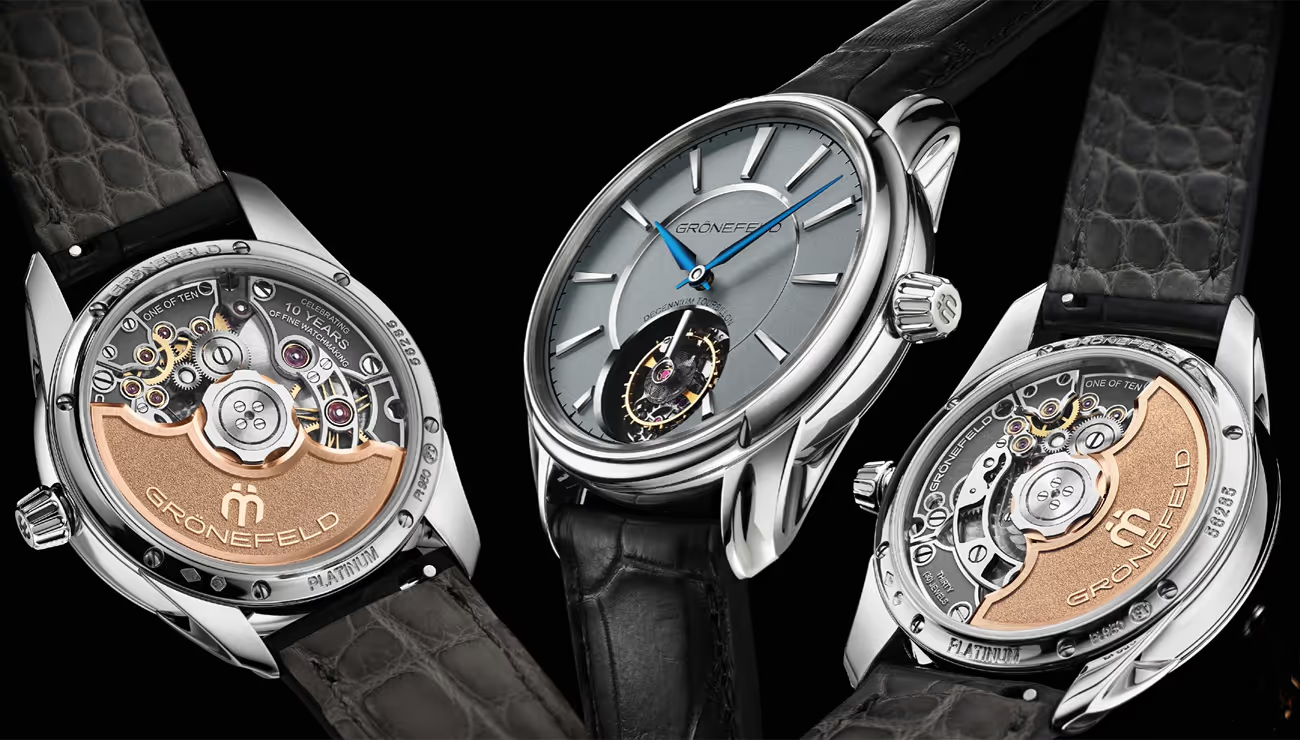
Introduction of the Decennium Tourbillon
Introduction of the Decennium Tourbillon to celebrate Grönefelds 10 years of fine watchmaking. This model is limited to only 10 examples.
2018
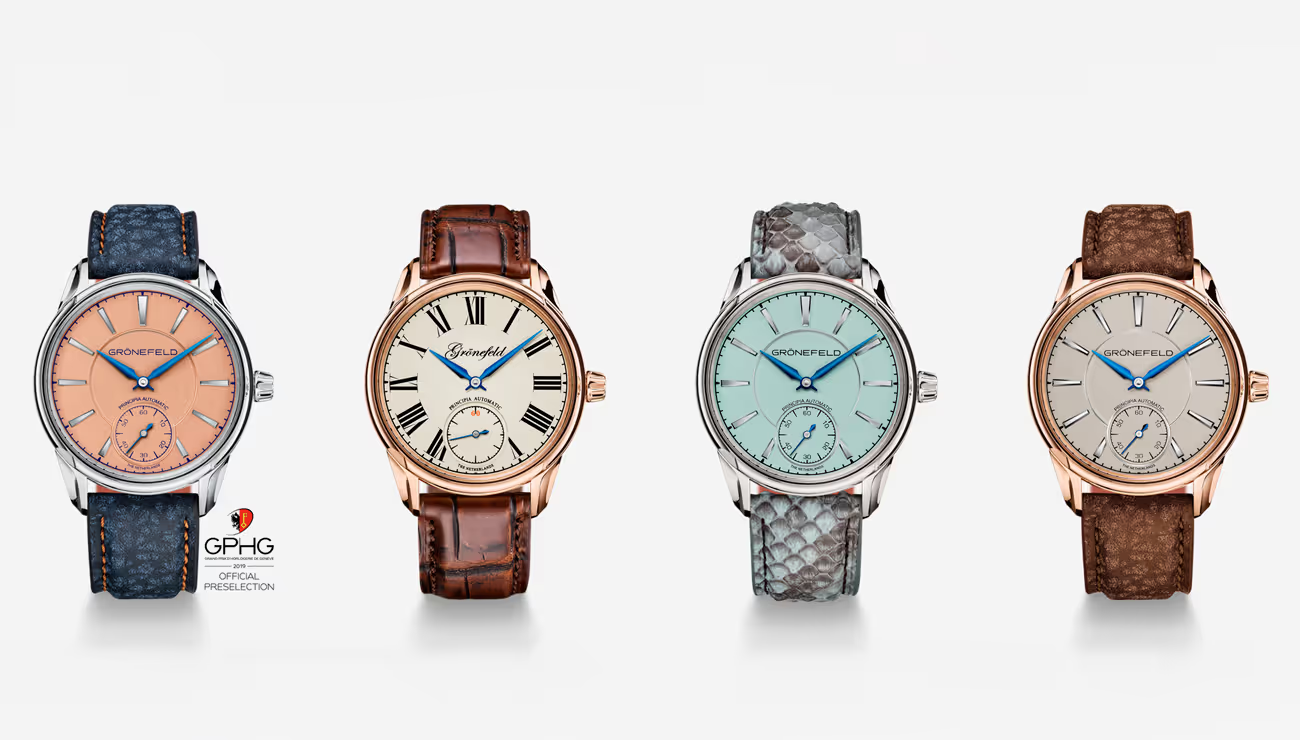
Introduction of the 1941 Principia
The finely crafted automatic watch - 1941 Pricipia - is available in a wide variety of dials, case materials, and straps.
2021
Team relocation
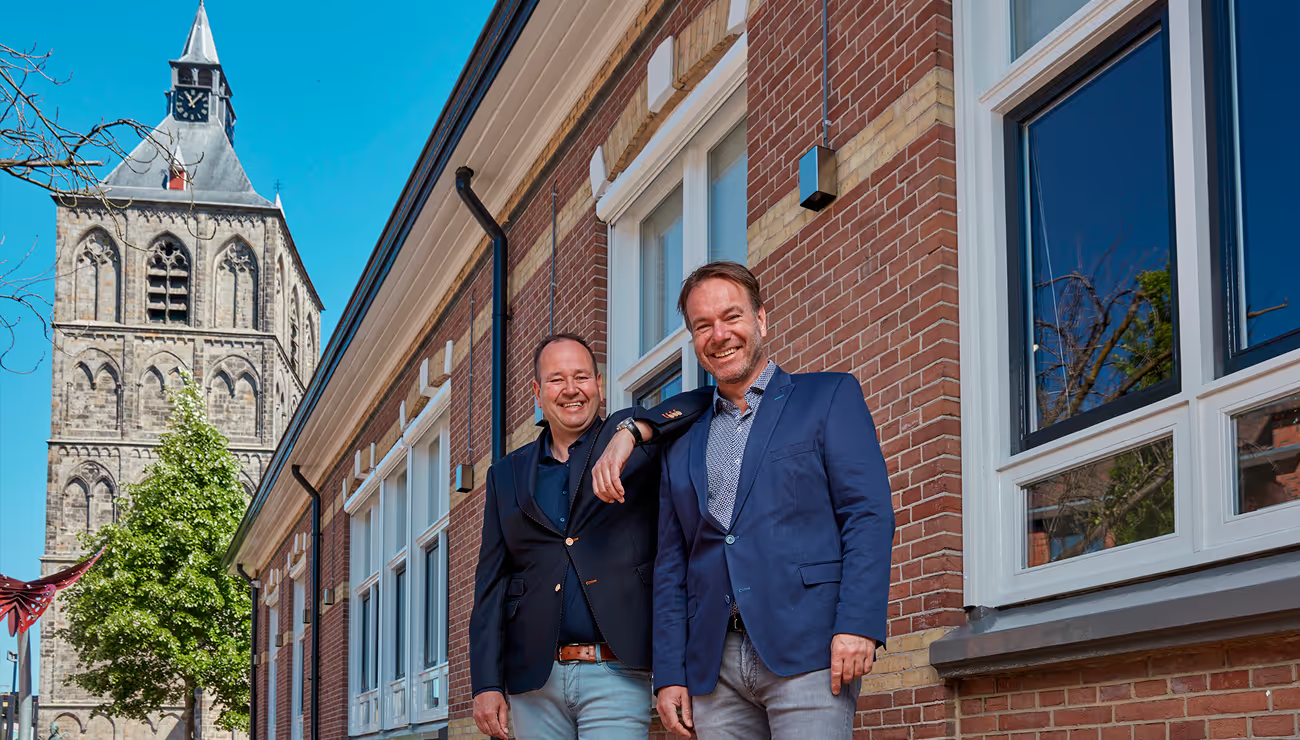
The complete Grönefeld team moves to new premises at Sint Plechelmusplein in Oldenzaal overlooking the Plechelmus Basilica.
2022
Introduction of the 1941 Grönograaf
The 1941 Grönograaf is a classical chronograph, but consistent with the Grönefeld ethos, it incorporates several ingenious details. The technical advancements and the watch's aesthetics contributed to its recognition by the GPHG jury, leading to its award in the Chronograph category.

2022
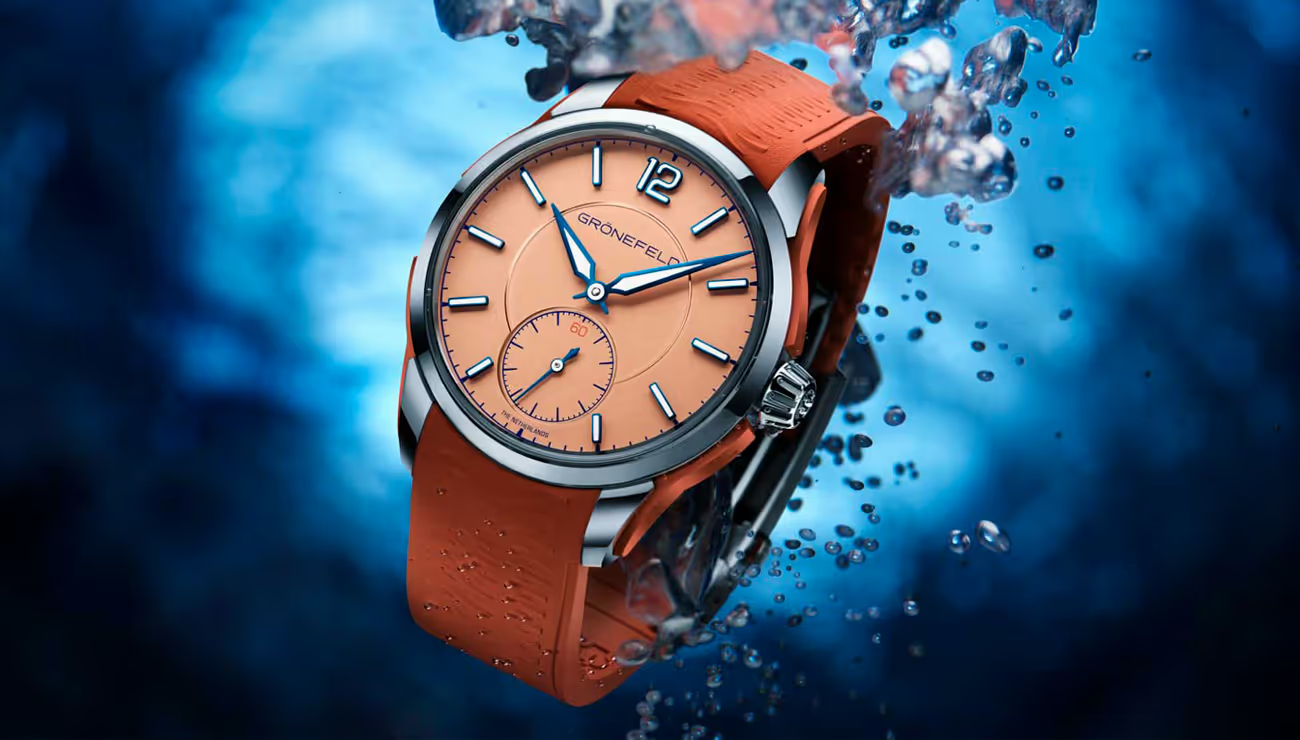
Introduction of the 1969 DeltaWorks
For the 1969 DeltaWorks, Bart and Tim were inspired by the Dutch ‘Delta Works’. It is their first sports utility watch appropriately named 1969 DeltaWorks, which also refers to Bart's year of birth.
2023
awarded THE Gold Medal of Honour
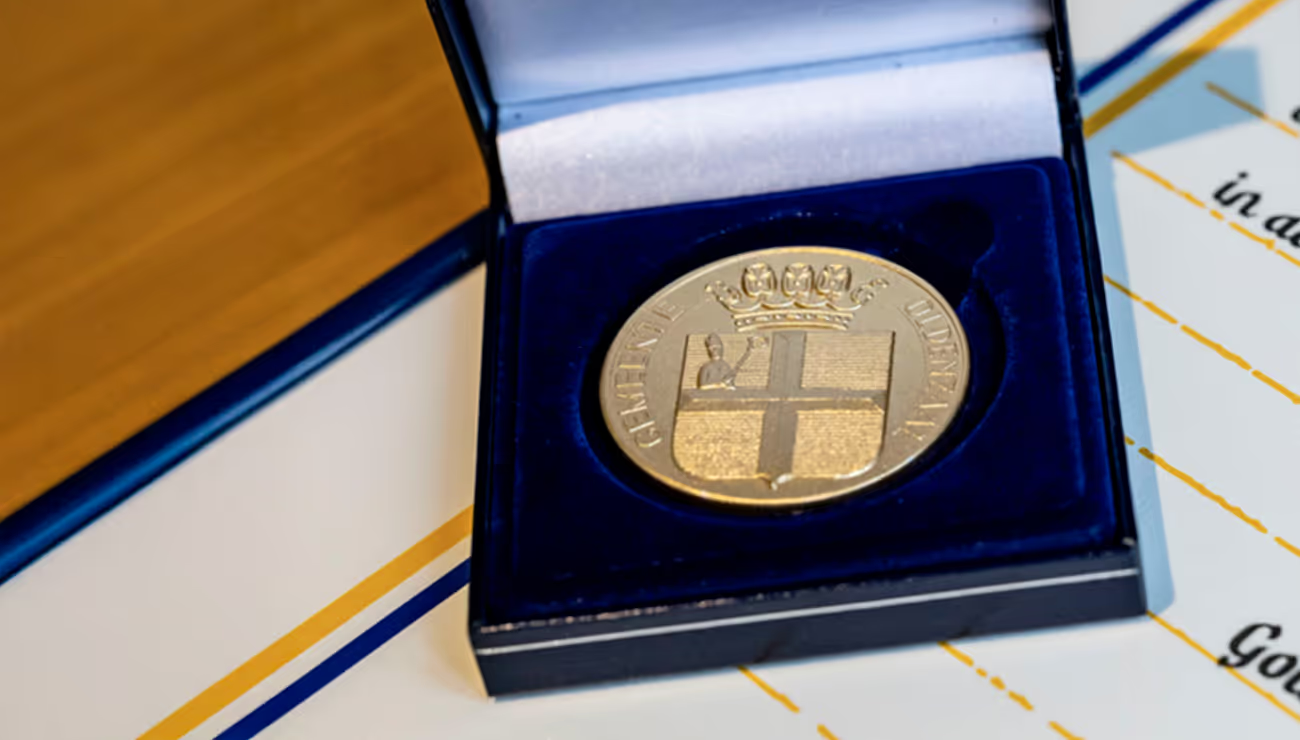
Grönefeld is awarded the Gold Medal of Honour by the mayor of Oldenzaal. ‘Grönefeld has been a national and international calling card of Oldenzaal for many years and deserves the appreciation of the municipality in the form of a golden medal of honour,’ said mayor Patrick Welman.
2024
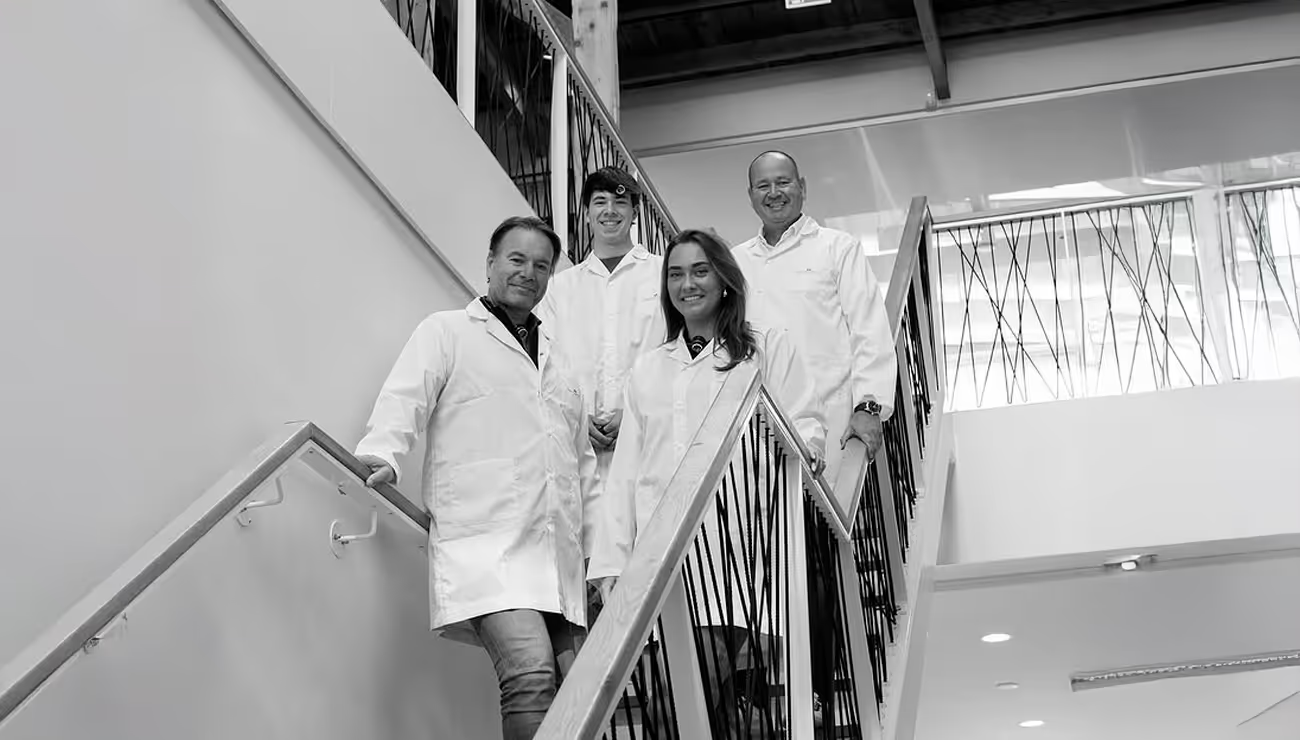
The 4th generation
The children of Bart and Tim starting with watchmaking training at work.
2024
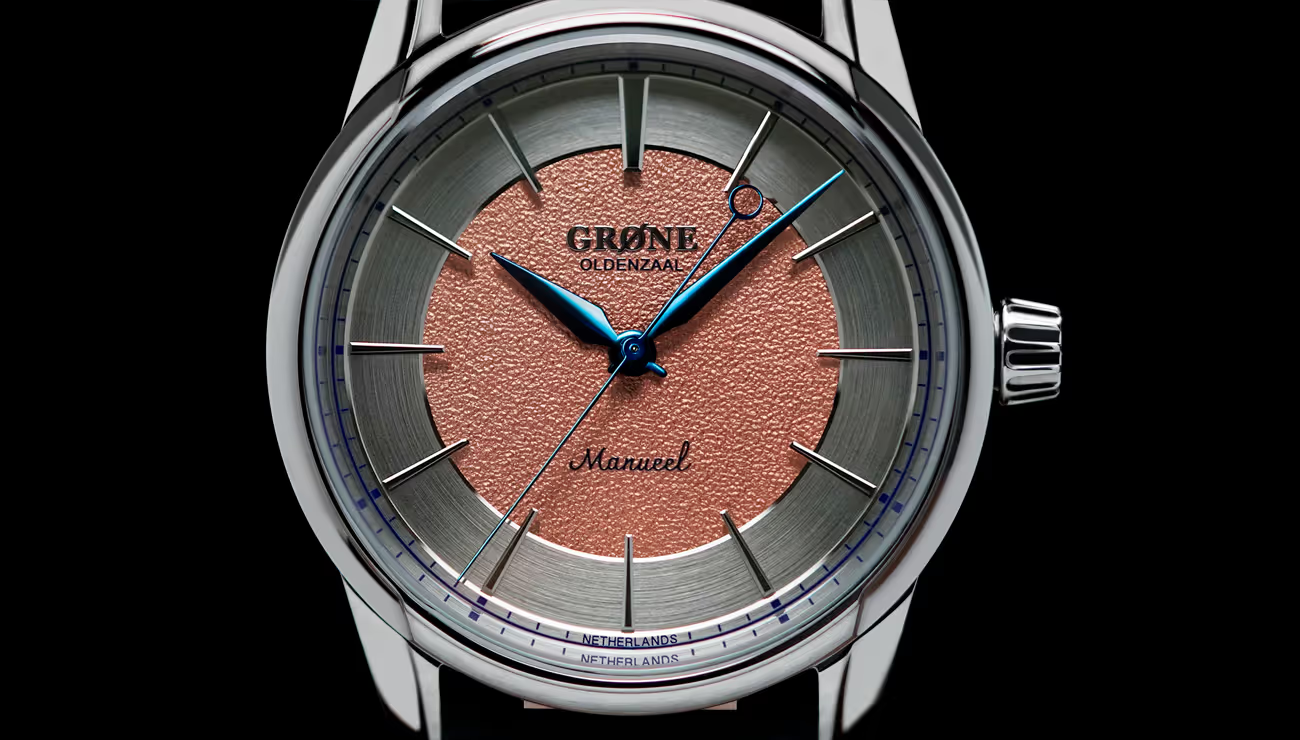
Introduction of the brand GRØNE
GRØNE OLDENZAAL is the second-tier luxury brand. The aim of GRØNE is to bring watches to a wider audience while maintaining high standards of design, aesthetics, and quality. Grone.com
2025
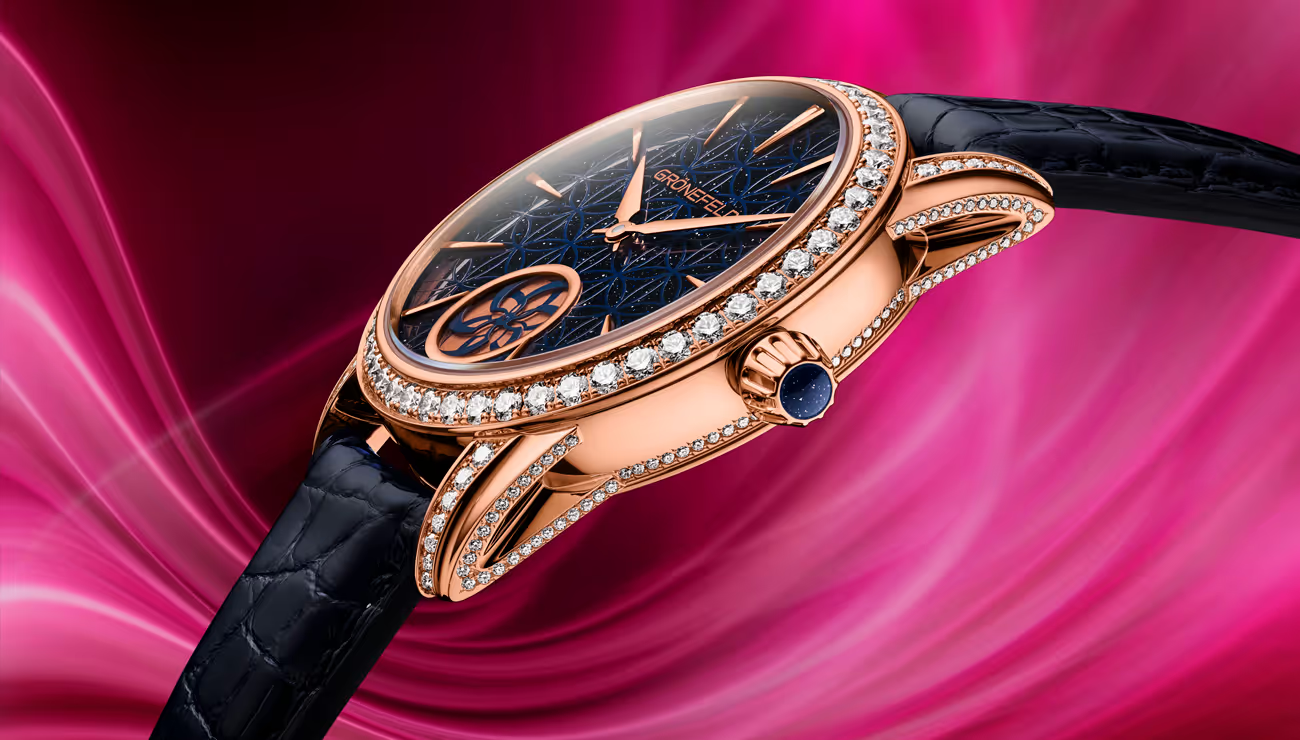
Introduction of the first Grönefeld ladies' model
The 1944 Tanfana is Grönefeld first ladies' model. This ladies’ watch embraces new design codes and employs some materials not previously seen on a Grönefeld timepiece.
2026
Introduction of the 7 Sins
The set of the 7 Sins is a singular work of art, created for one collector who understands rarity in its purest form. Each watch carries its own identity, expressed through historically inspired colors and carefully matched straps.
How it began: A meeting of two crafts. For nearly 30 years, Bart and Tim have shared a close friendship with Kees Engelbarts — a Dutch master engraver based in Geneva, renowned for his exceptional craftsmanship. Throughout these years, one idea remained: to combine his art of engraving with their horological creations. Grönefeld and Kees Engelbarts had collaborated before, but in 2022 they set out to make something extraordinary. Today, Bart and Tim present the result: A set of 7 timepieces, each representing one of the 7 Sins. A project defined by patience, mastery, and an uncompromising pursuit of excellence.
Dials of Distinction
Each dial embodies one scene of the 7 Sins. Drawing inspiration from the masterful etchings of Jacques Callot, Kees Engelbarts has transformed Callot’s iconic two-dimensional works into striking three-dimensional relief-sculpted dials.
Even Dutch master painter Rembrandt was fascinated by the work of his contemporary Jacques Callot (1592–1635), and it is widely believed that he collected his etchings, highlighting the exceptional quality of Callot’s work.
This unique 7 Sins collection is housed in the Grönefeld's 1941 stainless steel case. Diameter 39.5 mm. Thickness 10.5 mm.
Powered by Mechanical Art
Each of the 7 Sins timepieces is powered by Grönefeld’s automatic Calibre G-06.
Its stainless-steel bridges echo the façades of traditional Dutch houses known as “bell gables” a reference to the Horological Brothers’ homeland. The bridges are meticulously hand-bevelled to achieve a brilliant gleam, with jewels set in gold chatons.
A gold plate indicating the corresponding Sin is mounted on the movement.
Seven Watches. One Box. One Owner.
The set of the 7 Sins is a singular work of art, created for one collector who understands rarity in its purest form. Each watch carries its own identity, expressed through historically inspired colors and carefully matched straps. No two are alike. Yet together, they form one coherent statement.
All seven timepieces are presented in a precisely one-meter-long gift box crafted by Fedon in Italy. Bart and Tim refer to it as their first “Grönometer,” while Kees Engelbarts playfully calls it the “ChronoMaître”.
This set is for those who appreciate craftsmanship at the highest level, and who are willing to embrace something truly different.
This exceptional set will be made once. And only once.
Price of this unique set of 7: € 497,000.00 (local taxes and duties might apply)
Click here to see all images in the Photo Gallery

2026
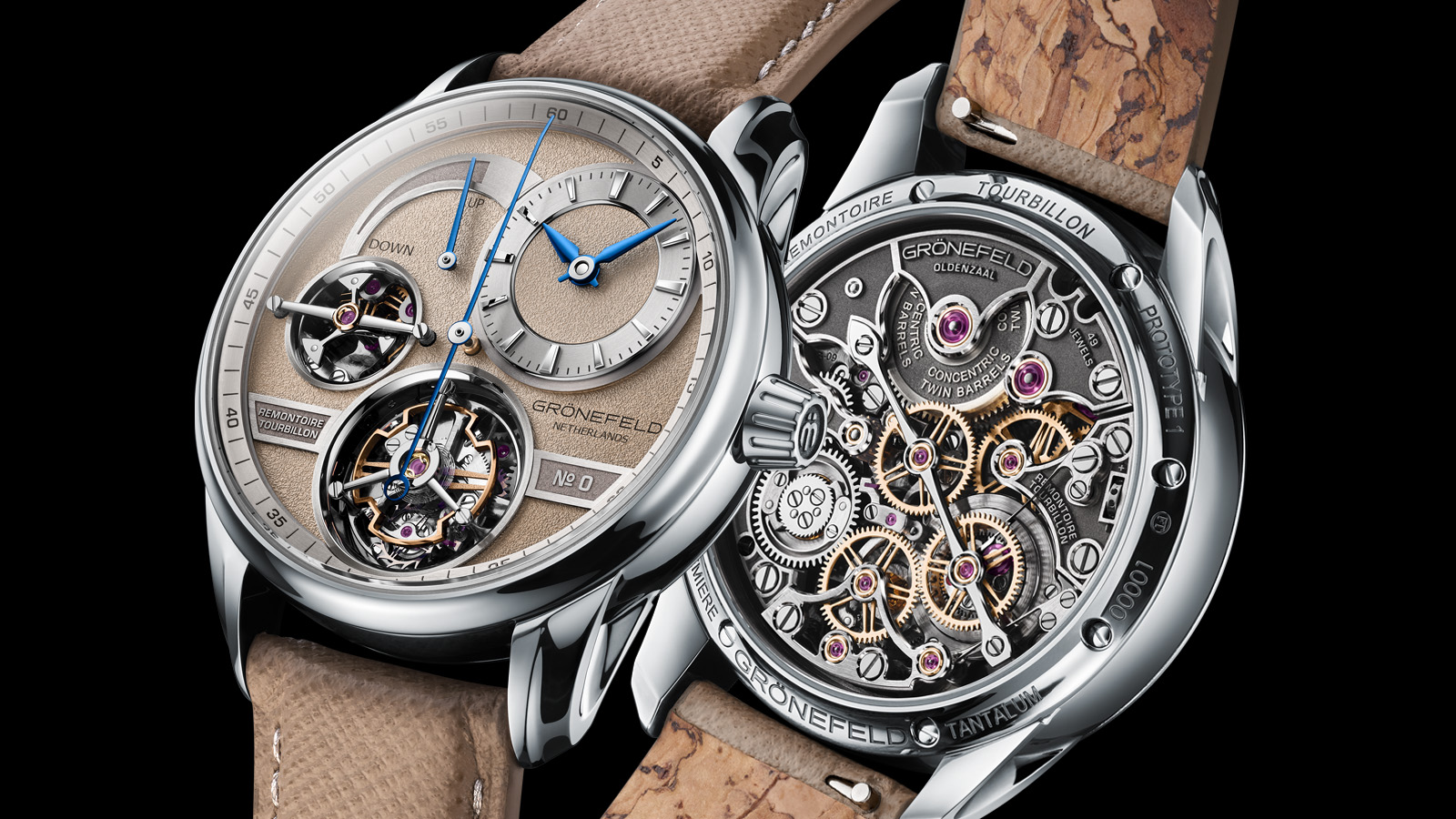
Introduction of the 1941 Quadrivium
The 1941 Quadrivium unites four of the brand’s most admired complications within a single, extraordinary watch. Developed entirely from the ground up, it features a 7.5-seconds remontoire, a one-minute flying tourbillon, central jumping seconds, and a power reserve indicator, all driven by a movement equipped with serially connected concentric twin barrels. It is both a technical and artistic achievement, already earning the affectionate nickname: “Grönefeld’s Greatest Hits".